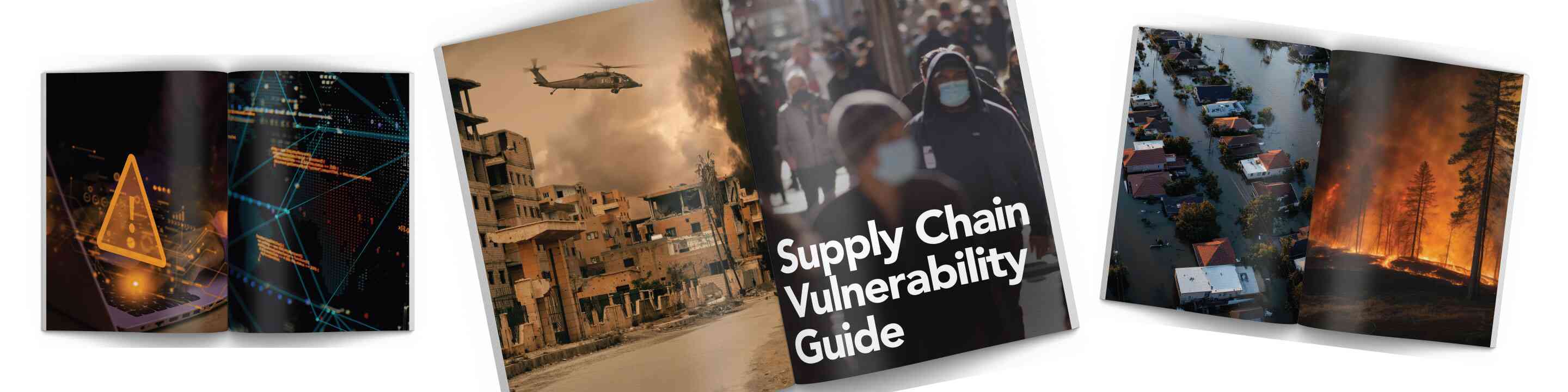
Supply chain resilience determines whether manufacturers and distributors can maintain margins, cash flow and customer confidence when disruption hits:
Supply chains are facing more pressure than at any other time in recent memory. Geopolitical tension, supplier instability, freight volatility and shifting regulatory demands have created an environment where manufacturers cannot afford blind spots. For CFOs, COOs and operations leaders, the risk is not theoretical. It shows up directly in product cost, inventory management, cash flow planning and delivery performance.
How prepared is your company to face these risks?
This informal assessment will help you quickly evaluate your exposure across five common disruption scenarios. Each section outlines real-world impacts and asks you to select one of four descriptions (A, B, C, D) that best defines your company’s current response to the relevant risk. Finally, you’ll use the scoring guide to understand your current resilience level.
Ready to dive in? Start below.
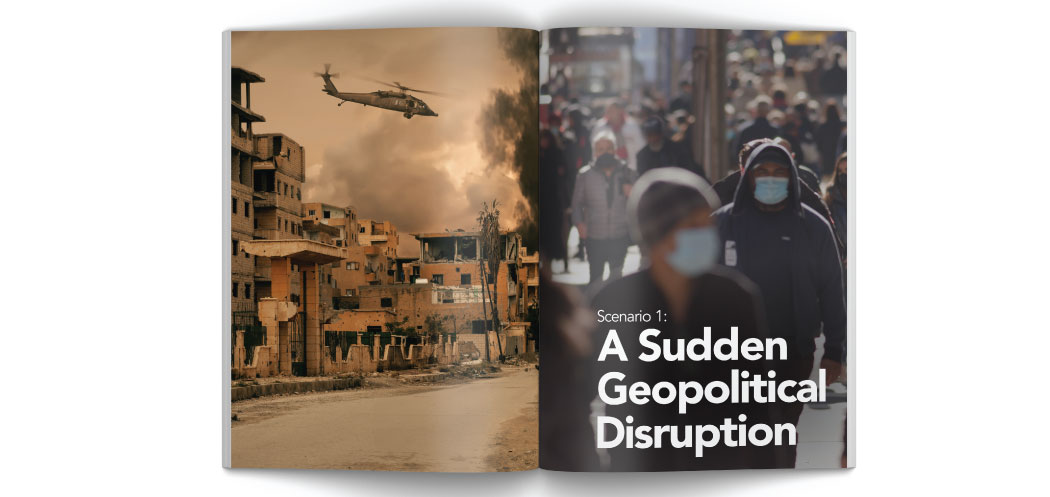
Events like regional conflict, sanctions, factory shutdowns or export restrictions can strain global supply lines within days. These disruptions cascade from procurement through production and delivery, affecting customer expectations and revenue predictability.
When geopolitical events restrict manufacturing hubs or trade routes, suppliers often raise prices to offset their own operational strain. For buyers, these cost increases hit suddenly and without negotiation leverage. CFOs typically see this in the form of inflated purchase orders, eroded product margin and unplanned adjustments to pricing or inventory strategy.
Freight volatility and rerouted logistics can increase transportation costs and stretch lead times.Geopolitical disruption often requires shifting from preferred routes to slower, more expensive alternatives. Air freight may become the only viable option for urgent shipments. For manufacturers, every additional day in transit delays production schedules and intensifies working capital requirements.
Manufacturers may experience inventory shortages that delay production schedules and revenue cycles.When upstream suppliers cannot ship, production halts downstream. This delay not only threatens customer commitments but also pushes revenue recognition further out. You may attempt to build short-term buffers, but without diversified supply, shortages can last weeks or months.
Companies that depend on single-region suppliers risk an immediate halt in critical components.Single-sourcing creates a fragile supply chain. If one region becomes inaccessible, entire product lines may stall. This exposes you to lost sales, expediting costs and strained relationships with strategic customers who rely on timely delivery.
In the event of a sudden geopolitical disruption, which description best defines your company’s current risk management capabilities:
As geopolitical pressures evolve quickly, freight and logistics volatility remain a persistent operational challenge.
Flooding, severe weather or other natural disasters can temporarily halt operations at a major manufacturing or distribution location. While these events are often localized, the downstream effects can quickly ripple across production schedules, inventory availability and customer commitments.
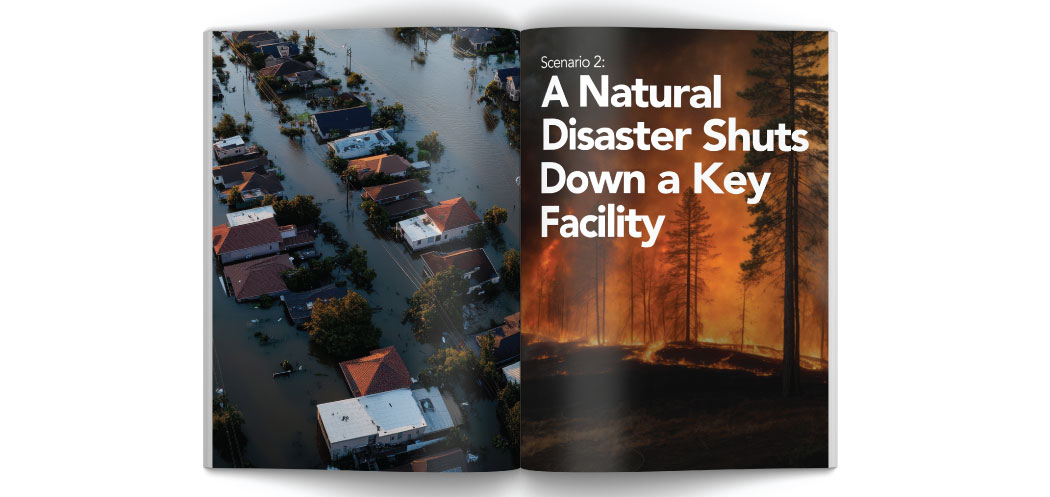
When production or distribution is interrupted, companies may need to source product from alternate locations or accelerate shipments from other facilities, often at higher unit cost.
Cash flow impact is typically minimal to moderate but can increase if alternative suppliers require different payment terms or additional inventory buffers.Shifting suppliers or production sites may require upfront payments, shorter terms or increased safety stock, temporarily tying up working capital.
Operational stability is moderately affected, particularly if contingency plans are limited.While many natural disasters are short term, temporary stockouts, delayed shipments and production backlogs can occur if alternate sites are not ready to absorb demand.
In the event of a natural disaster disruption, which description best defines your company’s current risk management capabilities:
Physical disruptions are not the only threat to operational continuity. Digital disruptions can create equally significant risk.
A ransomware attack or cybersecurity incident compromises financial systems, supplier communications or operational platforms. Even when customer data is not directly impacted, operational disruption can be severe.
In many cases, suppliers carry cybersecurity insurance or absorb remediation costs, reducing direct pricing impact.
Cash flow impact is generally minimal for customers, but internal disruption may delay invoicing or collections.Downtime can slow transaction processing, affecting short-term visibility into cash position.
Operational stability can be significantly disrupted depending on attack severity.Organizations may be forced to revert to manual processes, including paper documentation and phone-based coordination, increasing error risk and slowing execution.
In the event of a cyberattack, which description best defines your company’s current risk management capabilities:
Beyond sudden disruptions, broader economic forces can steadily erode margins and financial flexibility if left unaddressed.
Rising input costs, higher interest rates and tighter financing conditions place sustained pressure on profitability and liquidity. Unlike sudden disruptions, these challenges require disciplined financial strategy rather than rapid operational response.
If pricing is adjusted, demand sensitivity may introduce additional revenue risk depending on market conditions.
Cash flow impact is significant as borrowing costs increase and access to capital tightens.Higher interest rates raise the cost of debt while uncertainty in demand complicates working capital planning.
Operational stability is typically minimally disrupted.Operational changes tend to be deliberate and strategic, focused on sustaining profitability rather than reactive crisis management.
In the event of inflation and economic pressure, which description best defines your company’s current risk management capabilities:
In addition to economic pressures, international tariffs and trade policies present formidable challenges.
Tariffs, customs changes and trade policy shifts can immediately affect landed cost, cash commitments and production planning. Manufacturers with global suppliers or customers face heightened exposure when duties rise or trade agreements change.
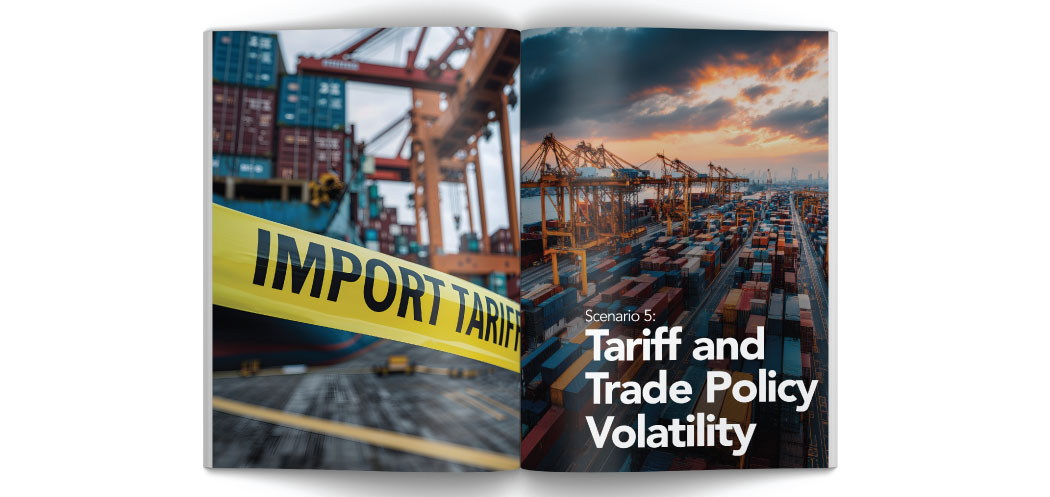
Tariff changes can raise material costs within weeks. These increases are often outside the supplier’s control, leaving you to absorb the impact. Even small percentage changes compound significantly across global supply networks and high-volume SKUs.
Customs delays extend lead times and disrupt production schedules.Incorrect tariff classifications, incomplete paperwork or heightened customs inspections slow deliveries. These delays introduce variability into production planning and forecasting, forcing you to adjust schedules, rework sequencing or idle lines.
Duties paid upfront create short-term cash flow strain.Tariffs and duties often require immediate payment at customs. For manufacturers with a large global footprint, this creates significant working capital pressure. Cash outlays spike unexpectedly, constraining liquidity and forcing CFOs to rebalance short-term cash plans.
Sudden changes in trade agreements may require rapid supplier requalification.When trade policies shift, you may need to pivot to new suppliers in regions with more favorable duty structures. This requires requalification, contract negotiation and quality testing — all of which take time and can stall production.
In the event of tariff and trade policy volatility, which description best defines your company’s current risk management capabilities:
Now that you’ve completed all five scenarios, your next step is to evaluate your overall resilience profile.
Tally your selections across the five scenarios, then review your primary category below.
Mostly A — Reactive and ConcernedYou respond to disruption after it happens. This creates financial instability, revenue delays and operational strain. Your next steps should focus on strengthening visibility, basic controls and foundational planning.
Mostly B — Aware and AdaptingYou recognize vulnerabilities but lack consistent processes or structure. You can build significant resilience by formalizing risk monitoring, strengthening documentation through dedicated contingency planning, and connecting finance and operations more tightly.
Mostly C — Proactive and StructuredYou have defined processes, diversified suppliers and reliable data. Your next step is embedding predictive analytics and strengthening cross-functional collaboration.
Mostly D — Resilient and OptimizedYou have mature systems, governance and proactive risk management. You are positioned to scale, adapt and maintain performance even during disruption. Your next step is to continue to stay abreast of changes in risk management best practices as your company evolves.
If you found that your company has room to grow its risk management strategy, the time to start is now. CFOs and COOs that take the lead on improving supply chain resilience help protect revenue and sustain growth. Discover how Armanino Risk Advisory and Manufacturing consultants can help you formally assess your risk, build operational resilience and support your long-term growth.
Don’t let operational inefficiencies, outdated systems or AI complexity slow you down. Connect with our M&D experts to simplify your operations and achieve measurable results.