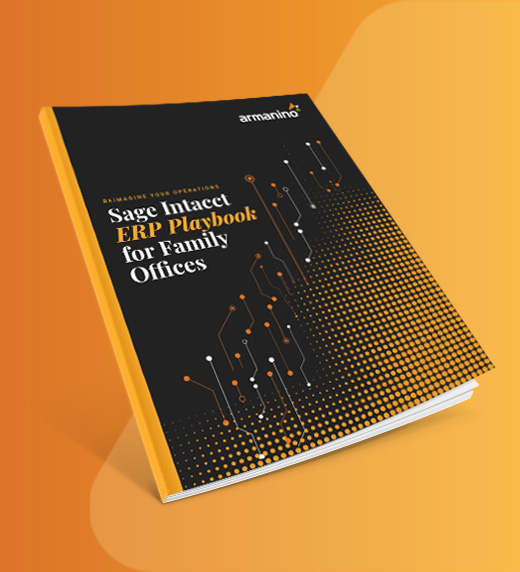
Family offices that overlook accounting red flags risk inefficiency, security gaps and missed opportunities:
Today’s family offices aren’t just preserving wealth. They’re actively building it through divestitures, repositioning, acquisitions and new investments. Unlike previous generations who bought a Renoir just to hang for a century or kept a villa in Tuscany for decades, today’s next-generation family leaders expect to move capital faster, co-invest with others and pursue new opportunities as they emerge. That kind of momentum demands modern financial visibility.
These technology-savvy stakeholders are logging in from their phones. They expect dashboards, not data dumps. They want answers about performance, liquidity and risk in real time to support business and lifestyle decisions with confidence. Yet in many family offices, the technology delivering that critical information hasn’t changed in decades.
The result is a growing disconnect between how families operate and how their back offices are built, including:
So, what does that look like day-to-day? Here are five of the most critical accounting red flags that can undermine transparency and efficiency, and steps you can take to clear them up and keep things moving.
Your accounting may still run on spreadsheets, older versions of QuickBooks or legacy general ledger systems. Portfolio tools might be modern, but your daily accounting work is often manual, disconnected and time-consuming. Even creating a simple cash flow statement across dozens or hundreds of accounts can take hours of manual work.
As your assets grow, your complexity grows with them. Each new investment adds more spreadsheets, more reconciliations and more opportunities for errors. Your data is often a step behind, so when leadership wants instant answers, timely reporting becomes a struggle. And when workflows depend on a few key people who “just know how things work,” your entire operation becomes vulnerable if one of them leaves.
The solution: Moving to a modern, cloud-based accounting system gives you a much stronger base for day-to-day work and faster reporting. Business applications like Sage Intacct bring your data into one place, automate reconciliations and produce entry-level and personal financial reports without all the manual effort. That visibility works best when your chart of accounts is set up clearly and consistently from the start. When that foundation is solid, everything you manage becomes easier.
Growth rarely comes in neat, simple packages. A new investment often means a new LLC, tax ID, K-1 and another layer of reporting to manage. Real estate portfolios expand. Alternative investments multiply. Co-investments with siblings, cousins or partners become more common. What might start as 40 entities can quickly grow to 60 or 80. All this activity adds complexity fast.
When the same bookkeeper is still handling all daily responsibilities, the strain shows up quickly. Workloads compound along with the chances for delays and errors. Hiring more people isn’t the answer it once was. Nowadays, talent is harder to find and more expensive to keep. Few family offices want a model that depends on continuously adding headcount.
Your family office’s strategy may be to build, reinvest and create new revenue streams for the next generation. But when the operational backbone doesn’t scale with that ambition, growth itself can become the bottleneck.
The solution: Scalability starts with systems that can grow in phases instead of all at once. A modern platform such as Sage Intacct allows you to start with a core general ledger, automate high-volume processes like bank reconciliations and then add capabilities as complexity increases. The idea is not to size your system for today but stage it for tomorrow, so each new asset adds opportunity instead of operational drag.
Many family offices have layered technology on top of technology without modernizing the core. What once may have been a practical setup has turned over time into a fragile patchwork of legacy systems, spreadsheets and manual workarounds. Your financial data now lives across multiple platforms that weren’t built for today’s security expectations, reporting needs or regulatory complexity. These outdated foundations have created serious cybersecurity, data integrity and compliance risks.
With manual systems, sensitive information is easier for the wrong people to access, files are more likely to be shared recklessly and basic security controls can break down. Your financial, personal and investment data often gets scattered across emails, spreadsheets and disconnected systems with limited oversight. In a multi-family office environment, where your data must be strictly separated, the security stakes are even higher.
These issues can spill over into your tax and compliance work. When reconciliations, reporting and tax preparation depend heavily on manual tasks, the chances of missed deadlines, misstatements and incomplete documentation increase. The longer your family office operates this way, the greater your exposure becomes across security, compliance and operations.
The solution: Moving to a modern, cloud-based system helps lock down your sensitive data, control who can see what and keep a clear record of activity without extra manual effort. It minimizes the need for workarounds and curbs dependence on spreadsheets and emails. It gives you a firm foundation to adopt automation and AI as your organization grows.
Your monthly close can take so long that by the time your numbers are ready, they are already outdated. You end up spending most of your time looking backward instead of forward. You become a historian of what already happened, instead of a strategic partner helping leadership decide what should happen next.
This lag shows up everywhere. Your board meets to discuss issues such as investment opportunities, liquidity or risk, and is often forced to make decisions using stale information. Your family members ask personal financial questions and wait days or weeks for answers because your back office is still trying to close the books. Time-sensitive opportunities can stall simply because your numbers are not ready yet.
Growth, liquidity planning and lifestyle decisions all depend on timing. When your financial information moves slowly, everything else does too, and promising or lucrative opportunities can be missed. The longer your office operates this way, the harder it becomes to break.
The solution: The goal is not to fix everything at once. Start small and prove value with quick wins. Automating high-volume tasks like bank reconciliations and basic closes can free up weeks of staff time each month. That allows your team to shift from manual work to planning, problem-solving and delivering timely insights.
The biggest obstacle to progress is not technology or budget. It’s stagnation. It can sound like:
“This is how we’ve always done it.”
“It works well enough.”
“We’ll deal with it later.”
That mindset can feel safe in the short term, but it creates real risk over time.
You want proof before committing to major overhauls. Your CFO worries about disruption. You don’t want to spend money without being confident it will pay off. But the real question is not, “What does it cost to change?” It’s, “What is the cost of staying exactly the same?”
The solution: Change does not have to be overwhelming to be effective. Small, focused improvements create trust, demonstrate return and make it easier for you to take the next step forward with confidence.
As your family office complexity increases, the pressure to move faster and deliver clearer financial insight keeps growing. Knowing where to start can feel overwhelming, but you’re not alone. Learn how Armanino’s family office consultants can help you strengthen your back office, reduce risk and implement solutions like Sage Intacct to support long-term growth.
Maximize your day with industry-leading support and AI-backed tools. Connect with our team to explore how we can help you simplify your family office and build wealth.